TechVibeSpot earns a commission if you buy through links on this page. That never changes a verdict.
Yale finally built a smart lock for people who looked at the £220 Linus L2 and winced. The Yale Linus L2 Lite launched in December 2025 at £129.98, kept the Matter-over-Thread radio that makes the L2 interesting, and cut the built-in Wi-Fi, the rechargeable battery, and the metal shell to hit the price. For renters and Apple Home or Google Home users in the UK and Europe, that trade is worth examining closely, because on paper this is now the cheapest way to get a name-brand Matter lock on a euro-cylinder door. This Yale Linus L2 Lite review covers what the lock does well, where Yale cut too deep, and which rivals make more sense depending on the door you own and the country you live in.
How we assess: this review is based on manufacturer specs, official documentation, and verified owner reports, not hands-on testing.
Is the Yale Linus L2 Lite worth buying?
Yes, for most UK and EU renters and Matter households. At £129.98 it undercuts every name-brand Matter-over-Thread lock, installs over your existing euro cylinder in about 10 minutes with no drilling, and keeps your physical key working. Skip it if you need built-in Wi-Fi, quiet operation, or Apple Home Key.
Quick picks
Check price at Yale →
Check price on Amazon →
Check price on Amazon →
Key takeaways
- At £129.98 the Yale Linus L2 Lite is the cheapest name-brand Matter-over-Thread lock for euro-cylinder doors, with no subscription.
- It installs in about 10 minutes with no drilling and your existing physical keys keep working from outside.
- With a Matter hub (Apple TV, HomePod, Nest Hub) you get free remote control; without one, the £70 ConnectX bridge erases the savings versus the standard Linus L2.
- Main compromises: CR123A batteries with no battery-percentage display, a 68 dB motor with no quiet mode, no door sensing, no Apple Home Key.
- US buyers can’t use it — the Yale Approach (from $129.99) and Aqara U200 ($169.99) are the closest equivalents that fit American deadbolts.
What Is the Yale Linus L2 Lite and Who Is It Actually For?
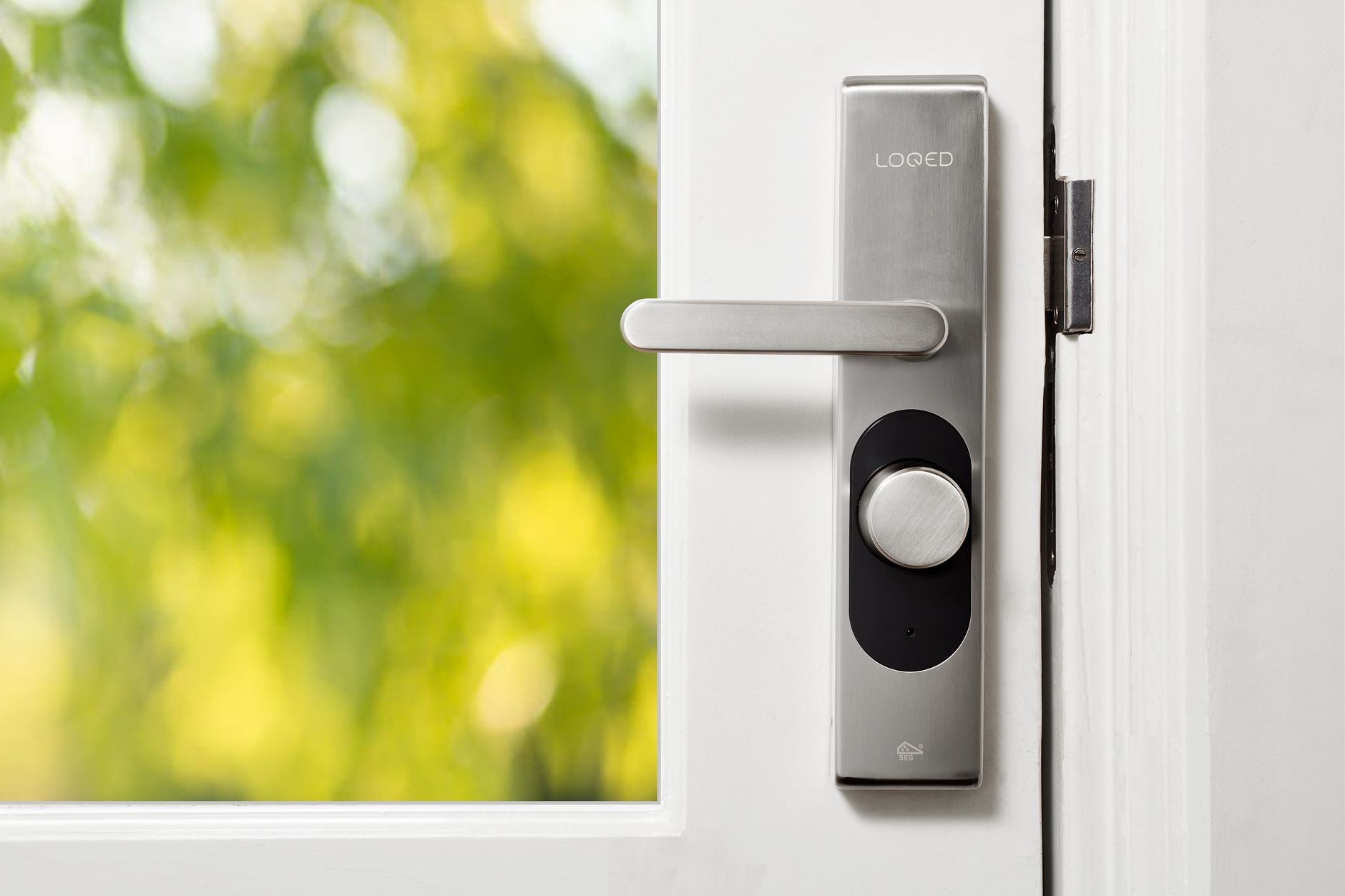
The Yale Linus L2 Lite is a retrofit smart lock that mounts on the inside of your door, over an existing euro-profile or Swiss round cylinder, and turns the key or thumbturn for you with a motor. Nothing changes on the outside of the door. Your existing key keeps working from the street side, which makes the L2 Lite one of the more sensible smart locks with a physical key backup — the backup is simply the key you already carry.
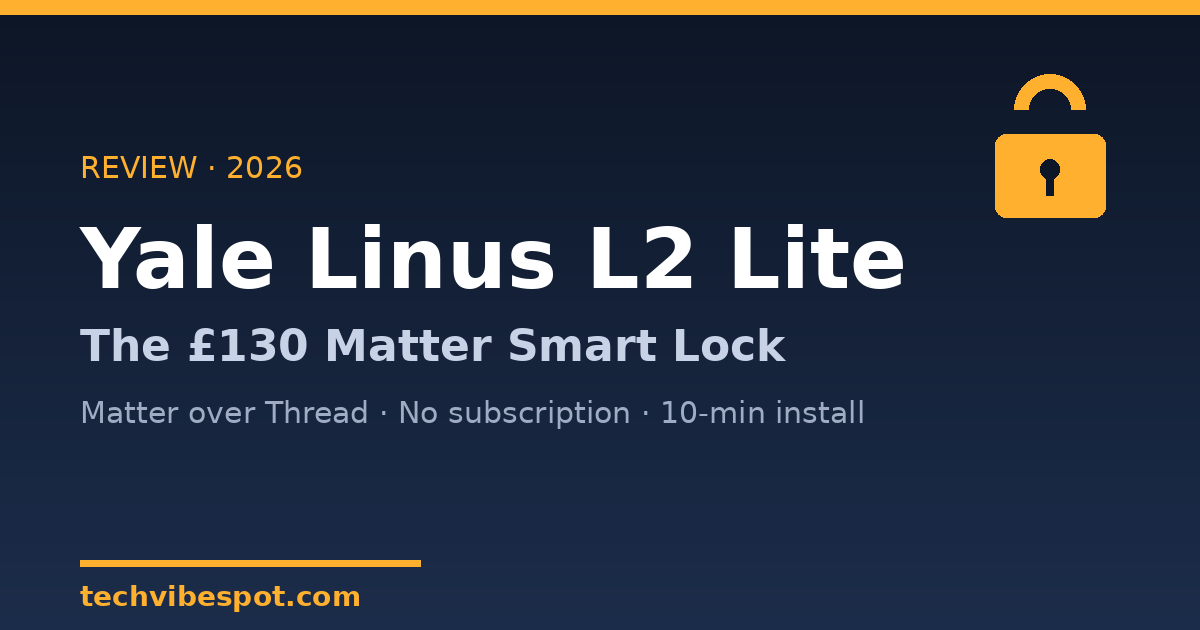
Yale released the Linus L2 Lite in December 2025 as the budget entry in the Linus range, below the standard Linus L2. It sells in the UK and across Europe in silver or black; Yale has not brought it to the United States, where doors use single-cylinder deadbolts rather than euro cylinders. According to Notebookcheck’s review, the unit measures 61 mm across and 72 mm deep and weighs 260 g, which makes it one of the most compact interior-mounted locks sold in Europe — visibly smaller than a Nuki and close to premium locks costing far more.
The target buyer is specific: you live in the UK or EU, your door has a standard euro cylinder that lifts to lock, you already run (or plan to run) a Matter hub such as an Apple TV 4K, HomePod, Google Nest Hub, or an Echo with Thread, and you want app control, auto-unlock, and shared digital keys without paying Nuki money. Renters are the other clear audience, because installation is adhesive-and-clamp with no drilling, and the lock comes off cleanly when the tenancy ends.
How Much Does the Yale Linus L2 Lite Cost, and What Do Accessories Add?
The Yale Linus L2 Lite costs £129.98 in the UK and €139 in the eurozone. TechRadar puts that at roughly $170 or AU$250 for readers converting from other markets. There is no subscription. Every core feature — app control, digital key sharing, activity feed, auto-unlock — is included in the purchase price, which is not something every smart lock brand can claim in 2026.
The accessories are where Yale claws margin back, and you should price the full system before committing:
- ConnectX Wi-Fi Bridge (£70): required for remote control through the Yale Home app when you’re away from Bluetooth range and don’t have a Matter hub. If you do have a Matter hub, you don’t need this for remote control through Apple Home, Google Home, Alexa, or SmartThings.
- Yale Smart Keypad 2 with fingerprint (about £100 / €113): adds PIN codes (4–8 digits) and fingerprint unlock on the outside of the door.
- Yale Dot 3-pack (€29): NFC stickers that unlock the door with a phone tap. Cheap and clever.
A fully loaded L2 Lite with keypad and bridge lands near £300, which is Nuki territory. Buy it the way the price wants you to: lock plus a Matter hub you already own, plus maybe the Dot stickers. Bought that way, £130-160 gets you a complete keyless setup. Prices checked August 7, 2026.
How Easy Is the Yale Linus L2 Lite to Install?
Installation takes about 10 minutes and needs no drilling, no wiring, and no changes to the outside of the door. You remove your existing interior thumbturn or leave the key sitting in the cylinder (depending on your cylinder type), fix the mounting plate with the included adhesive pad or grub screws, clip the lock on, and let the Yale Home app run its calibration routine. Mark’s Tech Blogs, one of the first UK outlets to review the lock, timed the whole process at roughly ten minutes and called the in-app guidance clear enough for a first-time smart lock owner.
Two compatibility checks matter before you order. First, the cylinder: the L2 Lite fits almost all euro-profile and Swiss round cylinders, and Yale runs an online compatibility checker where you answer a few questions about your door before buying. If your cylinder doesn’t allow a key to turn while another key sits in the inside — the “emergency function” — you may need a £15-25 cylinder swap first. Second, the locking action: the L2 Lite works with lift-to-lock multipoint doors (lift the handle, then turn), but TechRadar notes it is incompatible with split-spindle doors, the type that lock automatically whenever the door closes. UPVC door owners should check which type they have before ordering.
Three CR123A batteries ship in the box and Yale rates them for up to six months. That rating, and what happens when the batteries run down, is one of this lock’s real weaknesses — covered below.
How Well Does Matter over Thread Work on the Linus L2 Lite?
Matter over Thread is the reason this lock exists at this price, and it works with every major platform: Apple Home, Google Home, Amazon Alexa, Samsung SmartThings, and Home Assistant. Pair the L2 Lite with a Thread border router — an Apple TV 4K, HomePod mini, Nest Hub (2nd gen), or a recent Echo — and you get remote lock/unlock, status checks, and automations in your platform’s own app with no Yale bridge, no cloud account dependency for basic control, and no monthly fee.
This is the detail that separates the L2 Lite from cheaper Bluetooth-only locks: without any Yale accessory, a Matter household still gets full remote control. The £70 ConnectX bridge only becomes necessary if you have no Matter hub at all, or if you want remote access specifically inside the Yale Home app (some features, like auto-unlock by time, route through the bridge). If you’re weighing hub-free options more broadly, our guide to smart locks that work without Wi-Fi covers the trade-offs in depth.
Day to day, the lock offers auto-unlock as you approach (via Bluetooth geofencing, which Mark’s Tech Blogs found dependable), scheduled auto-lock, shared digital keys with an activity log so you can see who came and went, and the KeySense button on the lock face for manual control. Bluetooth 5.4 handles local phone control when you’re home.
The gaps: there is no Apple Home Key, so you cannot tap an iPhone or Apple Watch against a reader to unlock — for that, see our roundup of Apple Home Key smart locks. And there is no door-position sensing of any kind. The L2 Lite knows whether the cylinder is turned, not whether the door is shut. Lock it while the door stands open and every app will report it secure. Yale’s own Auto-Lock works around this with timers rather than certainty.
What Are the Yale Linus L2 Lite’s Biggest Weaknesses?
The L2 Lite’s flaws are the direct result of hitting £130, and reviewers across the board flag the same five.
1. CR123A batteries. The lock runs on three CR123A lithium cells — a camera-era format that costs £6-10 per set, isn’t sold in most corner shops, and isn’t rechargeable in standard form. Six months per set is Yale’s best case; heavy use shortens it. The standard Linus L2 uses a rechargeable pack. Notebookcheck called the choice “rather special and expensive,” and it’s the running cost nobody prices in at checkout.
2. No battery percentage anywhere. Mark’s Tech Blogs flagged this as the single strangest omission: neither the Yale Home app nor any connected platform shows a battery level. You get a push notification at roughly 20% and daily nags after that. For a device that physically locks your home, a visible percentage is a reasonable ask, and Yale doesn’t provide one.
3. It’s loud. Notebookcheck measured about 68 dB at one metre during operation — comparable to a Nuki Ultra in its standard mode, except the Nuki has a quiet mode and the Yale doesn’t. If your bedroom sits near the front door, a 3 a.m. auto-lock cycle will be audible. Each lock or unlock cycle also takes around 7 seconds, which is typical for motorised euro-cylinder locks but slower than a keypad deadbolt.
4. No door sensing. As covered above, the lock reports bolt state, not door state. Yale’s own US locks solved this years ago with DoorSense; its absence here is a cost decision.
5. Plastic housing. The shell is plastic rather than the L2’s metal. Mark’s Tech Blogs judged the build “solid, not plasticky” in the hand, while Notebookcheck found the mounting assembly gave “not the most stable impression” during installation, though it worked fine once fitted. Split the difference: it’s acceptable at the price, and it isn’t premium.
None of these are dealbreakers for the core audience. All of them are things the £220 Linus L2 or a £350 Nuki Ultra does better, which is exactly how Yale wants the range to work.
Yale Linus L2 Lite vs Yale Linus L2: Which One Should You Buy?
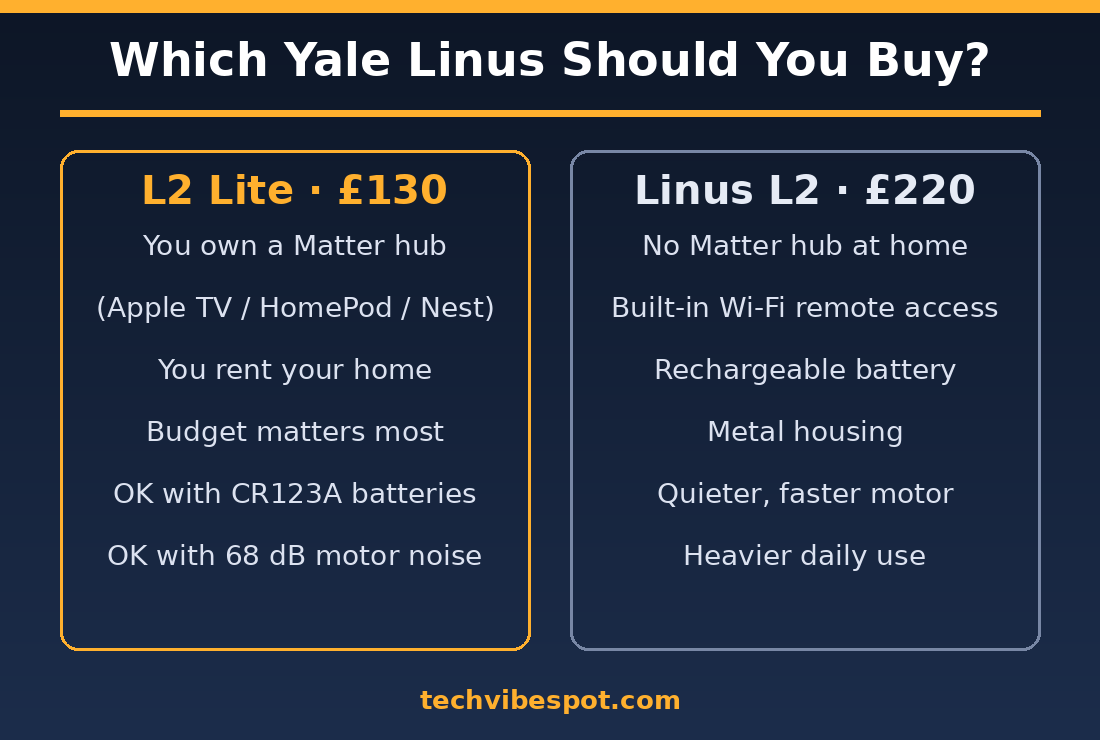
The standard Yale Linus L2 costs around £220 — £90 more — and that money buys four concrete upgrades: built-in Wi-Fi (no bridge needed for remote access even without a Matter hub), a rechargeable battery pack instead of CR123A cells, a metal housing, and quieter, faster motor operation. Both locks share the same Matter compatibility, the same app, the same accessories, and the same fit on euro cylinders.
The decision comes down to your hub situation and your tolerance for battery faff. If you already own an Apple TV, HomePod, or Nest Hub, the L2 Lite’s missing Wi-Fi costs you nothing — Thread covers remote control — and you’re paying £90 mostly for the rechargeable battery and quieter motor. Nice to have, rarely worth £90. If you have no Matter hub and no plan to buy one, the maths flips: the L2 Lite plus £70 bridge costs £200, at which point the standard L2 at £220 with Wi-Fi built in is the better buy, and the quieter motor comes free with the decision.
For a household that locks and unlocks ten times a day, the rechargeable battery is the sleeper argument for the L2: CR123A sets twice a year, every year, against a USB recharge. Over three years that’s £40-60 in batteries the L2 never asks for.
What Are the Best Yale Linus L2 Lite Alternatives in 2026?
Three locks come up in every cross-shopping conversation, and one of them is the answer for American readers.
Aqara Smart Lock U200 ($169.99 / ~£160) is the strongest direct rival, and the rare lock that fits both euro cylinders and US single-cylinder deadbolts. It ships with a wireless fingerprint keypad in the box, supports Apple Home Key (which the Yale lacks), runs Matter over Thread, and uses a rechargeable battery. Where the Yale is smaller and cheaper as a bare unit, the U200’s bundle price beats a Yale L2 Lite plus £100 keypad by a wide margin. If you want keypad-and-fingerprint entry from day one, the U200 is the better package. We compared its bigger sibling in our Aqara U400 review. See the U200 in black or silver at Amazon.
Nuki Smart Lock Ultra (~€350) is the premium pick for euro doors: metal body, integrated Wi-Fi, a genuinely quiet mode, faster motor, and the most mature retrofit-lock app in Europe. It costs more than two and a half L2 Lites. Buy it when noise or build quality is the thing you care about most; otherwise the Yale does the same job for far less.
Yale Approach ($129.99, US) is the answer to the most common question about this lock: what do Americans buy instead? The Approach is Yale’s US retrofit lock — same philosophy, mounts on the inside of your existing deadbolt, keeps your keys working. It has built-in Wi-Fi (no bridge), auto-unlock, and an optional fingerprint keypad. The base lock is on Amazon in black, and a bundle with the touchscreen keypad is sold alongside it. Budget US buyers should also look at the TEEHO TE001 keypad deadbolt — regularly under $70 on Amazon — which replaces the whole deadbolt rather than retrofitting it; our guide to the best smart locks under $100 ranks it against the field.
Yale Linus L2 Lite vs the competition
| Product | Price | Connectivity | Key backup | Best for | |
|---|---|---|---|---|---|
| Yale Linus L2 Lite | £129.98 / €139 | Matter over Thread, Bluetooth 5.4 | Existing keys work | UK/EU renters & Matter homes | Check price |
| Yale Linus L2 | ~£220 | Wi-Fi, Matter over Thread, Bluetooth | Existing keys work | Households without a Matter hub | Check price |
| Aqara U200 | $169.99 | Thread (Matter), Bluetooth, NFC, Home Key | Existing keys work | Fingerprint + Apple Home Key buyers | Check price |
| Yale Approach + Keypad | from $129.99 | Wi-Fi, Bluetooth | Existing keys work | US single-cylinder deadbolts | Check price |
| TEEHO TE001 | ~$65 | Keypad (standalone) | Physical keys included | US budget buyers | Check price |
Is the Yale Linus L2 Lite Worth Buying in 2026?
Yes — with one condition attached. The Yale Linus L2 Lite is the best-value Matter smart lock for euro-cylinder doors right now, and both Mark’s Tech Blogs (“one of the best-value smart locks available right now”) and TechRadar (4/5 for value, recommended for renters and Matter homes) land in the same place. The condition: you should already own, or be willing to buy, a Matter hub. That single fact decides whether the missing Wi-Fi is irrelevant or a £70 tax.
Buy the Yale Linus L2 Lite if:
- Your door has a standard euro-profile or Swiss round cylinder that lifts to lock
- You run Apple Home, Google Home, Alexa, or SmartThings with a Thread border router
- You rent, and drilling or replacing hardware is off the table
- You want your existing physical keys to keep working from outside
- You want name-brand security (128-bit AES, Yale’s lock pedigree) under £130
Skip the Yale Linus L2 Lite if:
- You have no Matter hub and won’t buy one — get the standard Linus L2 instead
- You want Apple Home Key or fingerprint entry out of the box — get the Aqara U200
- Quiet operation matters (bedroom near the door, sleeping children) — Nuki Ultra
- You live in the US — the L2 Lite doesn’t fit American deadbolts; the Yale Approach is the equivalent
- You want the lock to know whether the door is actually closed — nothing in the Linus range does this
At £129.98 with no subscription, the compromises are honest ones: visible, priced-in, and avoidable by paying more. That’s what a good budget product looks like.
Ready to go keyless?
UK & EU doors: the Linus L2 Lite is the value pick. US doors: the Yale Approach does the same job for American deadbolts.
Yale Linus L2 Lite: FAQ
Does the Yale Linus L2 Lite work without a hub?
Yes, over Bluetooth when your phone is in range: locking, unlocking, key sharing, and auto-unlock all work hub-free. Remote control from outside Bluetooth range requires either a Matter hub (Apple TV, HomePod, Nest Hub, Thread-capable Echo) or Yale’s £70 ConnectX Wi-Fi bridge.
Does the Yale Linus L2 Lite support Apple Home Key?
No. The L2 Lite works fully with Apple Home over Matter — Siri, automations, remote control — but there is no Home Key tap-to-unlock. Aqara’s U200 offers Home Key at a similar bundle price if that feature drives your decision.
Can I still use my physical key with the Linus L2 Lite?
Yes. The lock mounts entirely on the inside of the door and drives your existing cylinder, so outside keys keep working exactly as before. Your cylinder may need an emergency function (key works while another key is inserted inside) — Yale’s online compatibility checker confirms this before purchase.
How long do the batteries last, and what type does it use?
Three CR123A lithium batteries, included in the box, rated by Yale for up to six months of typical use. There is no battery percentage shown in any app; you get a low-battery notification at around 20%. Replacement sets cost £6-10.
Is the Yale Linus L2 Lite available in the US?
No. It fits euro-profile and Swiss round cylinders, which American doors don’t use, and Yale sells it only in the UK and Europe. The closest US equivalent is the Yale Approach, a retrofit lock for single-cylinder deadbolts with built-in Wi-Fi, from $129.99.
Will the L2 Lite fit my door?
It fits almost all euro-profile and Swiss round cylinders on doors that lift to lock, including most UPVC multipoint doors. It does not work with split-spindle doors that latch-lock automatically on closing. Yale’s website has a free compatibility checker that answers this definitively in about a minute.
How loud is the Yale Linus L2 Lite?
Notebookcheck measured roughly 68 dB at one metre — about the level of a loud conversation — for each 7-second lock cycle, with no quiet mode available. If silence matters, the Nuki Smart Lock Ultra’s quiet mode is the category’s benchmark.
Does the Linus L2 Lite have a keypad or fingerprint reader?
Not built in. Yale’s Smart Keypad 2 (around £100) adds PIN and fingerprint entry outside the door, and the £29 Yale Dot NFC stickers add tap-to-unlock. Both are optional; the bare lock is app, auto-unlock, and KeySense button only.
Sources: TechRadar · Notebookcheck · Mark’s Tech Blogs · HomeKit News. Prices checked August 7, 2026.