TechVibeSpot earns a commission if you buy through links on this page. That never changes a verdict.
Apple finally put a date range on its smart home push. On July 28, Bloomberg’s Mark Gurman reported that three new Apple home devices are “nearly ready to launch”: a refreshed Apple TV 4K, a new HomePod mini, and the long-delayed smart home hub with a 7-inch square screen, facial recognition, and a new tvOS-based operating system. The first two arrive this fall. The hub lands between October and early next year. Within a day, the report was everywhere from 9to5Mac to Gizmodo, and searches for anything Apple-plus-home spiked with it.
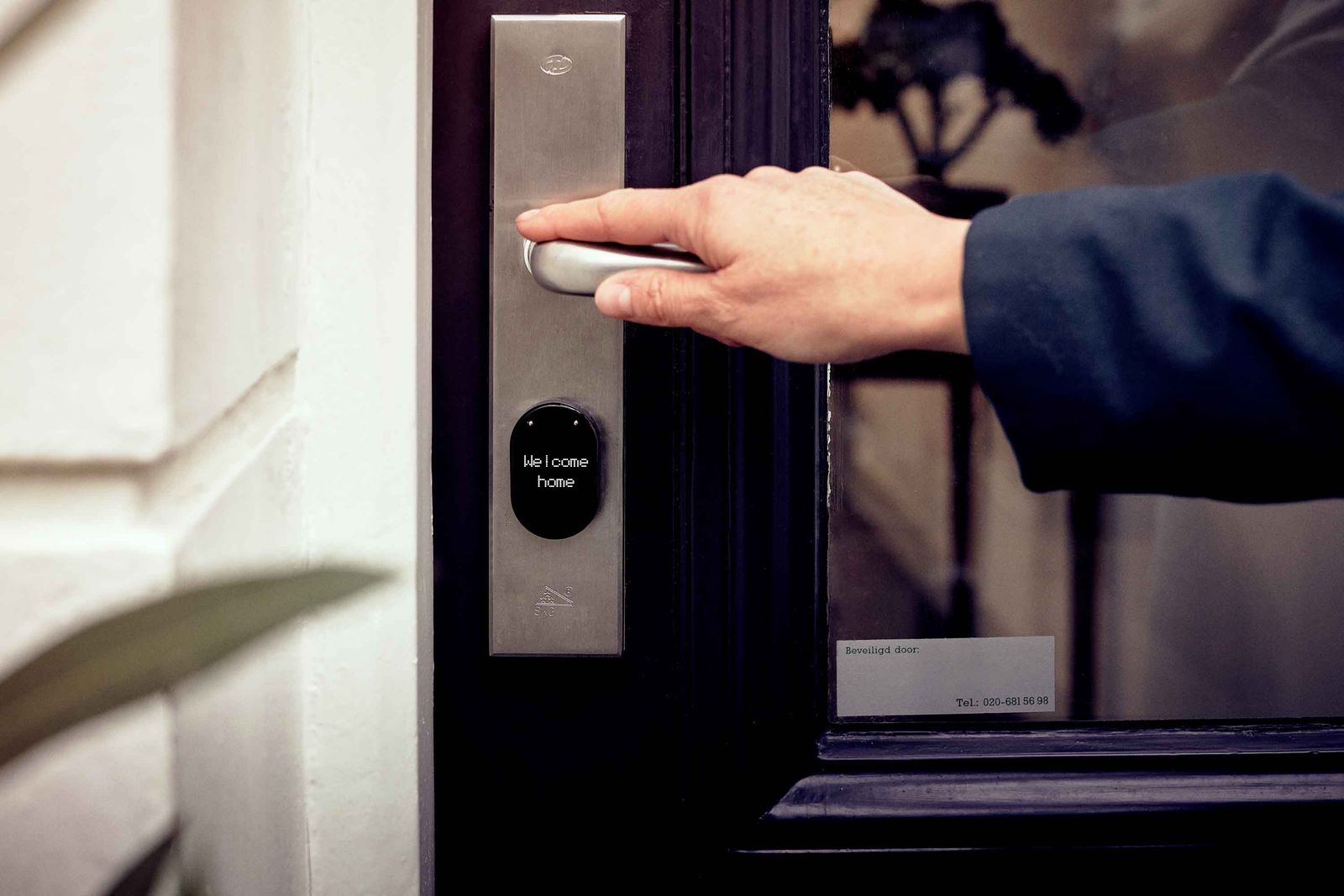
Here is the part that matters for your front door: none of those three devices is a lock, and Apple’s rumored security camera and doorbell are explicitly later projects. The door hardware side of an Apple smart home still belongs to third parties, and it runs on a feature that already works brilliantly in 2026: Apple Home Key, the NFC credential that unlocks your deadbolt with a tap of an iPhone or Apple Watch.
What is the best Apple Home Key smart lock right now? The Schlage Encode Plus ($299.99) is the best Home Key lock for most doors in 2026: built-in Wi-Fi, Thread support, a keypad, and bank-grade hardware. The Level Lock Pro ($349) hides the tech inside the door, the Aqara U300 ($229.99) covers lever-handle doors, and the Aqara U100 ($129.99) is the budget pick.
How we assess: research/news-based analysis, not hands-on testing.
Key takeaways
- 3 Apple devices are “nearly ready to launch” per Bloomberg’s July 28 report: Apple TV 4K, HomePod mini, and a 7-inch smart home hub.
- 0 locks or doorbells are on that list, so Home Key hardware from Schlage, Level, and Aqara remains the only way to give an iPhone door superpowers.
- 4 locks earn a recommendation in this guide, from $129.99 (Aqara U100, about £105 / AU$195) to $349 (Level Lock Pro, about £280 / AU$525).
- 2 of the 4 run Matter-over-Thread (Level Lock Pro, Aqara U300), the protocol combo most likely to plug straight into Apple’s new hub.
- Roughly 5 hours of unlocking remain via Express Mode even after an iPhone’s battery “dies,” which is why Home Key beats app-only locks on reliability.
What did Apple actually announce this week, and what is still rumor?
Apple announced nothing officially; everything comes from Bloomberg’s well-sourced July 28 report, so it pays to separate the confirmed-by-reporting from the speculative. Gurman says an updated Apple TV 4K and a new HomePod mini are done and expected this fall, both with faster chips to carry Apple’s rebuilt Siri. The third device is the interesting one: a smart home hub, codenamed in earlier coverage as J490, with a 7-inch square display, a half-dome speaker base or magnetic wall mount, FaceTime calling, home security monitoring, and facial recognition that changes what’s on screen depending on who walks up. It runs a new OS blended from tvOS and watchOS. Timing: between October 2026 and early 2027.
Firmly in the rumored column: a robotic tabletop hub with a 9-inch display and a motorized arm, an Apple-branded indoor security camera, and the Face ID video doorbell that surfaced in reporting back in late 2024. The doorbell is the one that would touch the lock market directly, since it would presumably unlock a compatible deadbolt when it recognizes your face. It did not make this week’s “nearly ready” list. If you have been holding off on a smart lock waiting for an Apple doorbell, the news just told you the wait is open-ended while the hub ecosystem around Home Key hardware is months away. Buying a Home Key lock now and adding Apple’s hub later is the sequence the report supports.
What is Apple Home Key, and why does this news make it matter more?
Home Key is Apple’s NFC door credential: your deadbolt lives in the Wallet app, and the door unlocks when you tap an iPhone or Apple Watch against the lock, the same gesture as Apple Pay. There is no app to open and no code to punch. Express Mode makes the tap work without Face ID confirmation, and it keeps working for around five hours after the iPhone battery gives out, on iPhone XS or newer. Credentials sit in the Secure Element chip, so a stolen phone without your passcode is still useless at your door.
The July 28 report raises the stakes because the hub is built around exactly this kind of interaction. A wall-mounted 7-inch screen that recognizes faces and monitors home security is the natural dashboard for the front door: lock status at a glance, camera feeds, and automations that fire when the door unlocks. Apple sells none of the door hardware, which means the companies that already ship Home Key locks are the ones positioned to ride the launch. Schlage, Level, and Aqara have had years of firmware maturity on Home Key while most of the lock industry chased Wi-Fi apps. If the hub arrives in October, the locks below are the ones it will find waiting.
How do the top Home Key locks compare in July 2026?
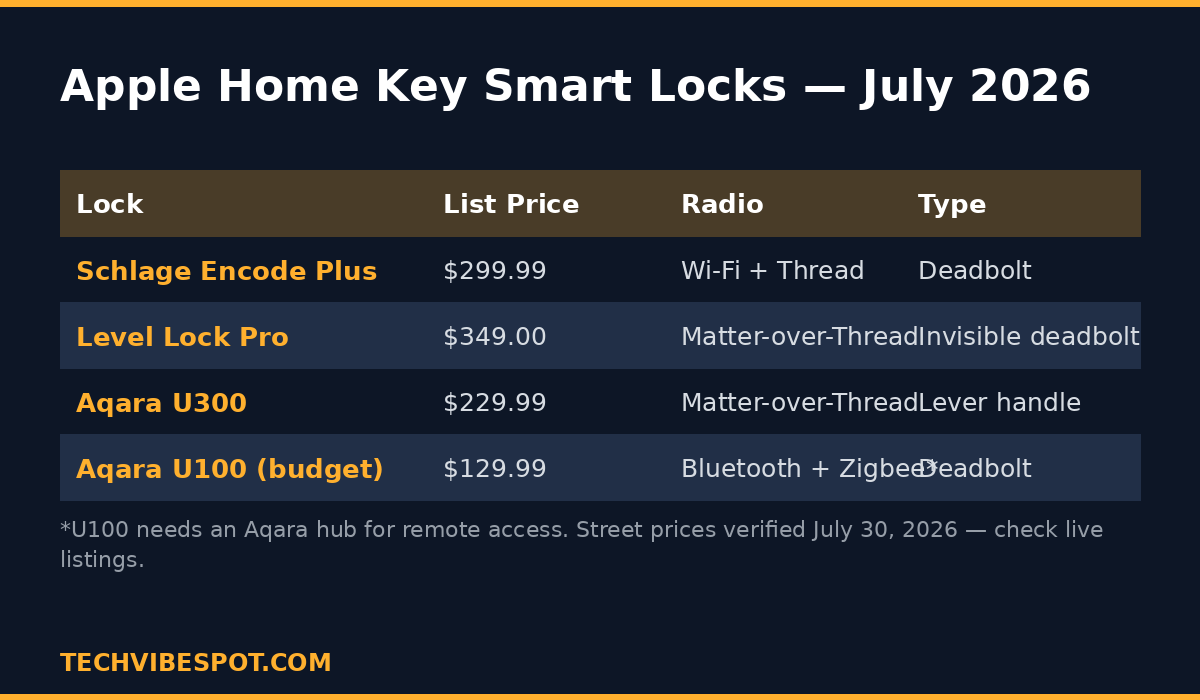
| Lock | List price (US) | UK / AU approx. | Connectivity | Entry methods | Best for |
|---|---|---|---|---|---|
| Schlage Encode Plus | $299.99 | ~£240 / AU$450 | Wi-Fi + Thread, HomeKit | Home Key, keypad, app, key | Most front doors |
| Level Lock Pro | $349.00 | ~£280 / AU$525 | Matter-over-Thread | Home Key, app, key, optional keypad | Design-first homes |
| Aqara U300 | $229.99 | ~£185 / AU$345 | Matter-over-Thread | Home Key, fingerprint, keypad, NFC, key | Lever-handle doors |
| Aqara U100 | $129.99 | ~£105 / AU$195 | Bluetooth + Zigbee (hub for remote) | Home Key, fingerprint, keypad, NFC, key | Budget buyers |
Prices are US list at the time of writing; street prices run lower in sales. UK and Australian figures are conversions for reference since US models ship with US door prep in mind (all four fit standard 2-1/8-inch bores).
Which Home Key lock is best overall for most people?
The Schlage Encode Plus at $299.99 is the answer for most American front doors, and it has held that position since it became the first Home Key deadbolt back in 2022. If you are an established brand skeptic, this is the exception: Schlage has been making door hardware since 1920, and the Encode Plus carries an ANSI/BHMA Grade 1 residential security rating, the top tier, with a certified pick- and bump-resistant cylinder. The smart half is equally complete. Wi-Fi is built in, so remote lock and unlock need no bridge, and a Thread radio switches on automatically when the lock detects an Apple ecosystem with a border router, cutting response times and roughly doubling battery life in Thread mode.
Day to day you get four ways in: iPhone or Watch tap, a backlit touchscreen keypad with up to 100 codes, the Schlage Home or Apple Home app, and a plain physical key. Airbnb integration generates codes for guests automatically, which is why the Encode Plus is all over short-term rentals. It also works with Alexa and Google Home over Wi-Fi, so a mixed-platform household is not locked into Apple. The trade-offs: no fingerprint reader, and the keypad-plus-deadbolt look is conventional. Street pricing has floated between $220 and $280 through July 2026, and it rarely hits deep discounts because it rarely needs to. If Apple’s hub does land in October, a Thread-capable, HomeKit-certified deadbolt from a century-old lock company is about the safest bet on the door.
What if you don’t want your smart lock to look like one?
The Level Lock Pro ($349) hides everything, including the radios and the motor, inside the door itself, so from the street your door shows a normal deadbolt and nothing else. Level’s party trick has always been packaging; the Pro model, which shipped in late 2025, added the piece the earlier Level Lock+ lacked: Matter-over-Thread, which reviewers at PCWorld and MacRumors called the feature that finally makes the invisible lock a first-class smart home citizen. Home Key works with a tap on the lock face, and because the credential rides Matter, the same lock also shows up in Alexa, Google Home, and SmartThings without any Level-specific bridge.
Battery life is the compromise you accept for invisibility. The Pro runs on a CR2 cell hidden in the bolt, and Thread traffic draws it down in months rather than the year a fat AA-powered lock manages. Level sells an optional keypad if you need code entry for guests, and the standard key cylinder remains for the traditionalists. At $349 it is the most expensive lock in this guide, and it is worth it for exactly one buyer: the person who vetoed every other smart lock on looks. That buyer is real; ask anyone who has tried to put a touchscreen deadbolt on a restored 1920s door. For everyone else the Encode Plus does more for less.
What about doors with a lever handle instead of a deadbolt?
The Aqara U300 ($229.99) is the Home Key answer for the doors the other locks cannot touch: single-bore doors with a latch-and-lever setup, which covers a huge share of side doors, interior office doors, and newer builds outside North America. It is a full replacement handle set with a fingerprint reader in the thumb spot, a touchscreen keypad above it, NFC card support, and Matter-over-Thread connectivity that brings fast, local Apple Home control plus Alexa, Google, and SmartThings through the same standard. Apple Home Key arrived on the U300 via firmware, and AppleInsider flagged it as one of the few lever locks anywhere with the feature.
Aqara’s hardware value is hard to argue with at this price: six entry methods, IPX3 weather resistance on the exterior escutcheon, and a claimed eight-plus months on four AA batteries with Thread active. The catch is fit and finish care: as a handle replacement, it needs the right door thickness and backset, so check Aqara’s compatibility guide before ordering, and US buyers should confirm their door is single-bore since a deadbolt-above-handle door is better served by the Encode Plus or U100. Best Buy and Amazon both stock it, and it has dipped to $199 in 2026 promos. For a garage-entry door or a home office that deserves the same tap-to-unlock as the front door, it fills a slot nothing else in the Apple ecosystem fills as cleanly.
What’s the best budget Apple Home Key lock under $150?
The Aqara U100 at $129.99 delivers about 80 percent of the flagship experience for well under half the money, which is why it has been the default recommendation for renters and first-time buyers since 2023. You still get genuine Apple Home Key with Express Mode, a fingerprint reader that unlocks in under a second, a touchscreen keypad with periodic and one-time codes, NFC cards, and a physical key backup. The body is IP65-rated against rain and dust, and six months of AA battery life is a realistic expectation. In US sales it has repeatedly dropped to $119 and occasionally lower, and at that price nothing with Home Key comes close.
The savings show up in the radios. There is no Thread and no Wi-Fi; the lock speaks Bluetooth to your phone directly, HomeKit over Bluetooth for local Apple control, and Zigbee to an Aqara hub if you want remote access, Matter bridging, and instant notifications. Without the hub, you cannot unlock from the office, though scheduled codes and fingerprints keep guests covered. Budget a $30-ish Aqara hub if remote control matters, and the total still lands under $170. One honest note on longevity: Bluetooth-plus-bridge architectures age worse than Thread-native ones, so think of the U100 as excellent value for the next few years rather than the decade. For a rental, a starter home, or a back door, that math works.
Should you wait for Apple’s own hardware before buying a lock?
No, and the structure of this week’s news is the reason. The devices Apple has “nearly ready” are hubs and speakers, not door hardware; the security camera and robotic display are explicitly later, and a doorbell was not mentioned at all. Apple’s pattern with the ecosystem has been consistent for a decade: it builds the platform (HomeKit, Home Key, the Home app, Thread border routers) and leaves the locks to certified partners. A lock you buy today is the lock Apple’s hub will control tomorrow.
Map it to your situation. If you’re all-in on Apple and plan to buy the hub the week it ships, buy Thread now: the Level Lock Pro or Aqara U300, or the Encode Plus with its dual radios, will attach to the hub’s Thread network with no extra hardware. If you’re platform-agnostic and might drift toward Alexa or Google, the Encode Plus and both Aqara locks cover all three ecosystems today. If you’re renting or spending under $150, the U100 gets you Home Key immediately and you can revisit in two years when Apple’s camera and doorbell rumors resolve. If your door has a lever handle, the U300 is the only serious choice on this list. The only person who should genuinely wait is someone whose current deadbolt works fine and who wants Apple’s doorbell specifically; that product has no reported date, so set a price alert on the lock you want and check back after Apple’s fall event.
How do you future-proof a smart lock purchase for the Apple hub era?
Three checks protect the money. First, insist on Home Key itself, not just “works with Apple Home”; plenty of Wi-Fi locks appear in the Home app but cannot do the NFC tap, and the tap is the feature that survives dead batteries, lost phones handed to kids, and app outages. Second, prefer Thread or dual-radio hardware. Apple’s hub is expected to act as a Thread border router like current HomePods, and Thread locks respond in a beat rather than the second or two Wi-Fi locks need to wake. Third, check ANSI/BHMA grading and your door prep: Grade 1 or 2 for a front door, standard 2-1/8-inch bore for the deadbolts here, and door thickness within the manufacturer’s range for the Level and Aqara hardware.
One more practical point: install quality beats lock quality. A $349 lock in a soft frame with half-inch strike screws is weaker than a $130 lock with 3-inch screws biting the stud. Whichever lock you order, spend the extra ten minutes swapping the strike plate screws. Security reporting has made this point for years, and it remains the cheapest security upgrade in the house.
Apple Home Key Smart Lock FAQ (July 2026)
Will current Home Key smart locks work with Apple’s new smart home hub?
Every sign points to yes. Bloomberg reports the hub runs a tvOS-based operating system with HomeKit built in, and Home Key locks already talk to Apple Home through standard HomeKit and Matter protocols. A lock that works with Apple Home today should appear on the hub’s screen the day you plug it in. Apple has never dropped support for certified HomeKit locks in an OS release.
What is the cheapest smart lock with Apple Home Key in 2026?
The Aqara U100 is the cheapest Home Key lock from a major brand, listing at $129.99 (about £105 / AU$195) and regularly dipping under $120 in US sales. You give up Thread and built-in Wi-Fi, and remote control requires an Aqara hub, but tap-to-unlock, fingerprint entry, and the keypad all work without one.
Does Apple Home Key work if my iPhone battery dies?
Yes, within limits. iPhones with Express Mode keep enough power in reserve to unlock a Home Key lock for roughly five hours after the battery indicator hits zero. It works on iPhone XS and later. An Apple Watch with Home Key set up is a second backstop.
Is Apple releasing its own smart lock or video doorbell?
Nothing is confirmed. The July 28 Bloomberg report describes a 7-inch smart home hub, refreshed Apple TV and HomePod mini for fall 2026, plus a security camera and a robotic hub later. Earlier reporting pointed to a doorbell with Face ID unlocking, but no doorbell or lock appeared in this week’s list, so treat that as rumor.
Should I buy a Wi-Fi or Thread smart lock for Apple Home?
Thread is the safer bet for an Apple-centric home in 2026. Thread locks respond faster and sip battery compared with Wi-Fi radios, and Apple’s HomePods and Apple TVs already double as Thread border routers. The upcoming hub is expected to as well. Wi-Fi still wins if you own no Apple hub hardware at all.
Do I need a HomePod or Apple TV for Home Key to work?
No. Home Key is an NFC tap between your iPhone or Watch and the lock itself, so it works with zero extra hardware. You only need a home hub device (HomePod, HomePod mini, or Apple TV) for remote control, automations, and Thread connectivity when you’re away from home.
Are Home Key smart locks secure enough for a front door?
The four locks in this guide all carry ANSI/BHMA residential security grades, and Home Key itself stores credentials in the iPhone’s Secure Element, the same chip that protects Apple Pay. The transaction is encrypted NFC. The realistic risks are the same as any deadbolt: a weak door frame or a poorly installed strike plate, not the radio.
What happens to these locks if Apple’s hub is delayed again?
You lose nothing. Bloomberg notes the hub has already slipped multiple times, but every lock here works fully today with an iPhone, and three of the four also work with Alexa and Google Home. You are buying into Home Key and Matter, which exist now, not into a promise.
Verdict: the four locks that are ready for Apple’s next act
The news cycle will spend the next three months arguing about what Apple’s hub can do. Your door does not need to wait for the answer. The Schlage Encode Plus is the best all-around Home Key deadbolt in 2026 and the safest $300 in this category; the Level Lock Pro is the pick when aesthetics rule; the Aqara U300 owns lever-handle doors; and the Aqara U100 makes Home Key a $130 decision instead of a $300 one. All four will be sitting in the Home app, ready, whenever Apple’s 7-inch screen finally shows up on the wall.
Sources
- 9to5Mac — Apple has three new smart home products ‘nearly ready to launch’ · Verified July 30, 2026
- AppleInsider — Apple’s smart home hardware refresh draws closer · Verified July 30, 2026
- Gizmodo — Apple might finally launch a smart home hub · Verified July 30, 2026
- PCWorld — Level Lock Pro review · Verified July 30, 2026
- MacRumors — Level Lock Pro review · Verified July 30, 2026
- Aqara — Smart Lock U300 official specs · Verified July 30, 2026
- PCWorld — Aqara U300 review · Verified July 30, 2026